May 28, 2026 • Declan Marsh • 9 min reading time • Prices verified June 11, 2026
Canon Full-Frame Mirrorless: RP, R8, and R6 Mark II — Picking the Right Rung Without Overspending
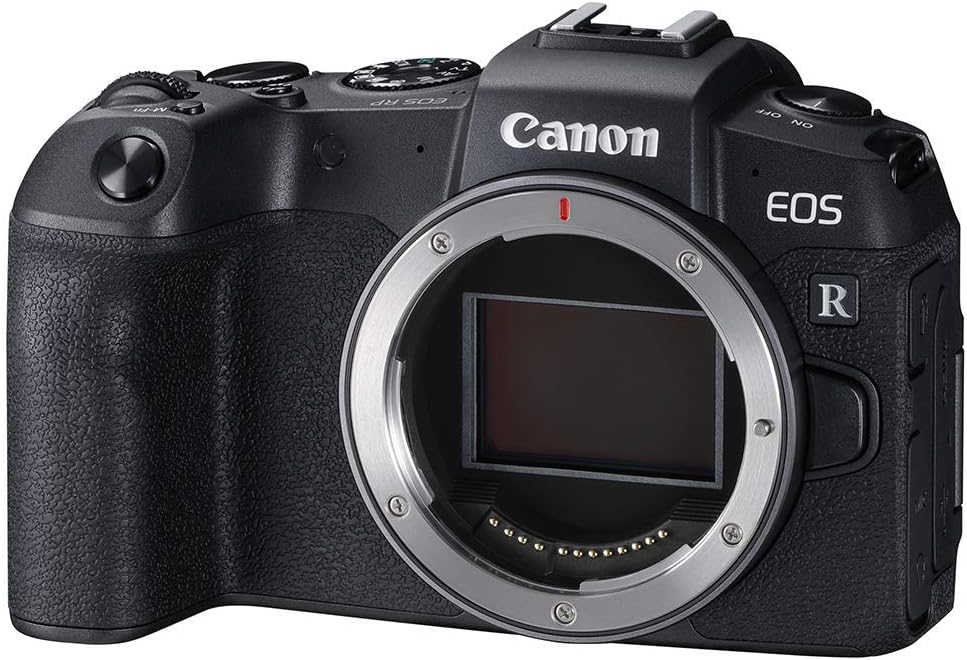
Canon makes a full-frame mirrorless camera at almost every price point in its RF lineup, and that’s both a gift and a trap. “Full-frame” simply means the camera’s sensor is the same size as a traditional 35mm film frame — larger than the crop-sensor cameras that dominate entry-level shelves, and generally better at gathering light in dark rooms, producing smoother backgrounds, and delivering files with more editing headroom. “Mirrorless” means the old optical mirror has been removed, making the body smaller and allowing Canon’s newer RF lens mount to sit closer to the sensor. All three cameras covered here — the EOS RP, the EOS R8, and the EOS R6 Mark II — share that full-frame mirrorless DNA. What they don’t share is much else. The gap between a used RP at roughly $700 and a new R6 Mark II at around $2,499 is wide enough to swallow an entire secondary lens budget. This guide is built to help you figure out which rung is actually right for you — and walk away with money left over for glass.
The Lineup at a Glance: What You’re Actually Comparing
Before getting into trade-offs, it helps to see the three bodies side by side on the numbers that move the needle for working photographers.
By the numbers (May 2026 street pricing, USD):
| Body | Sensor / MP | Burst (RAW) | IBIS | Video | Street Price (new) | Used / CPO est. |
|---|---|---|---|---|---|---|
| EOS RP | 26.2 MP | ~5 fps | None | 4K (cropped) | Discontinued / ~$700 used | $550–$750 MPB |
| EOS R8 | 24.2 MP | ~40 fps e-shutter | None | 4K (uncropped) | ~$1,299 | $950–$1,100 MPB |
| EOS R6 Mark II | 24.2 MP | ~40 fps e-shutter | Yes (8 stops) | 4K 60p uncropped | ~$2,499 | $1,800–$2,100 MPB |
A few clarifications on terms above: IBIS (In-Body Image Stabilization) is a gyroscopic system inside the camera body that counteracts hand shake — critical for low-light stills and handheld video. e-shutter refers to an electronic shutter that uses the sensor itself to “trip” the exposure rather than a physical curtain, enabling much faster burst rates but with caveats (more on that shortly). 4K uncropped means the camera reads the full width of the sensor to produce 4K video, rather than using only the center portion.
The megapixel counts are close enough that they are not a decision factor at this tier. All three will produce prints well beyond A2 size and crop-friendly files for editorial delivery. The differences that actually cost you — or save you — are elsewhere.
Where the RP Fits in 2026 (and Where It Doesn’t)
The EOS RP launched in 2019 as Canon’s lightest, most affordable full-frame mirrorless entry. It served its purpose well at the time: put a full-frame sensor in a compact, beginner-friendly body. By 2026 standards, reviewers at Imaging Resource’s Canon EOS RP review describe it as feeling “dated against its successors,” particularly around autofocus and video capability.
The RP’s autofocus is Dual Pixel CMOS AF — Canon’s phase-detection system — but it’s a significantly older generation than what the R8 and R6 Mark II carry. Eye and animal tracking exist but are noticeably less reliable in mixed or changing light. DPReview’s long-term assessments note that the RP’s AF “struggles to match the confidence of newer Canon bodies in fast, unpredictable subject movement.”
The RP’s ceiling moments:
- No IBIS. If you’re shooting in dim churches, reception halls, or evening events without a monopod, you’re going to need to lean on faster glass or accept motion blur on slower shutters.
- 4K with a crop. The RP applies a roughly 1.7× crop when recording 4K, which effectively turns your RF 24–105mm into something closer to a 41–178mm. Architectural, environmental portrait, and wide-angle work in video becomes painful fast.
- 5 fps mechanical burst. Fine for posed portraits. Limiting for anything that moves with intent — kids, pets, sports, documentary work.
Where the RP still earns its place: static subject work on a genuinely tight budget, as a dedicated second body for a photographer already deep in Canon RF glass, or as an entry point for someone who shoots primarily in controlled light (product, studio, landscape from a tripod). Photography Life’s comparison of the RP vs. R8 concludes bluntly that “for most active photographers, the R8 is a substantially better investment even at its higher price.”
At ~$600 used via MPB or KEH Camera, the RP’s value case is entirely budget-driven. Don’t talk yourself into it because the specs look “close enough.”
The R8: The Most Interesting Value Argument on This Rung
The EOS R8 is Canon’s 2023 answer to a specific question: Can we put the R6 Mark II’s sensor and autofocus into a smaller, lighter package at roughly half the price? The answer is largely yes, with two meaningful asterisks.
The R8 shares the same 24.2 MP sensor generation and the same Digic X-derived autofocus subject tracking as the R6 Mark II. In practice, this means you get the full Dual Pixel CMOS AF II system — class-leading face, eye, body, and animal detection — at a price point where previous Canon options had compromised. The Phoblographer’s R8 review characterizes the autofocus performance as “essentially indistinguishable from the R6 Mark II in most real-world scenarios,” which is a statement worth taking seriously.
What the R8 gives up vs. the R6 Mark II:
-
No IBIS. This is the asterisk that will end the R8’s candidacy for a meaningful portion of readers. Without in-body stabilization, handheld video is entirely dependent on lens IS (Canon calls it “IS” on their RF lenses, optical stabilization built into the glass itself). Many RF lenses do have strong optical IS — the RF 24–105mm f/4L IS is excellent — but you lose flexibility the moment you mount a prime or a third-party lens without IS. For hybrid shooters doing any walk-and-talk video, documentary B-roll, or event videography, the missing IBIS is not an annoyance; it’s a workflow constraint.
-
Battery life. The R8 uses the LP-E17 battery, a smaller cell shared with APS-C bodies like the M50. CIPA ratings sit around 220 shots per charge. The R6 Mark II uses the larger LP-E6NH and rates around 360 shots. In a day of wedding shooting or a long location day, this means carrying two or three extra R8 cells vs. one spare for the R6 Mark II. Not a dealbreaker, but a cost and a bag consideration.
-
Body build and weather sealing. The R8 has a polycarbonate outer shell with basic dust and drip resistance. The R6 Mark II carries more comprehensive weather sealing — a meaningful difference if you regularly shoot outdoors in variable conditions or are running gear rental operations where clients return bodies wet.
-
Single card slot. The R8 has one SD card slot. The R6 Mark II has two (one SD, one CFexpress Type B / SD hybrid). For wedding professionals or anyone who needs in-camera redundant backup — shooting raw to one card, JPEG to another as a safety net — single-card operation is a genuine liability management issue, not just a convenience preference.
Where the R8 wins cleanly: Travel photographers who already shoot with stabilized RF zoom lenses, studio portrait photographers who are on light stands anyway, wildlife photographers who don’t need dual card redundancy, and videographers who are primarily on a gimbal (which provides its own stabilization). The autofocus argument alone justifies the jump from the RP at the $1,299 new or ~$1,000 CPO price point.
The R6 Mark II: When the Premium Actually Pays
The R6 Mark II costs roughly double the R8. That premium is real, and whether it makes sense depends almost entirely on what your work demands.
PetaPixel’s R6 Mark II review calls the body “Canon’s best all-rounder in the RF lineup below the R5 Mark II,” and across aggregated long-form reviews, the pattern is consistent: the R6 Mark II earns its price through professional-grade durability and the specific features that commercial work and active subject photography demand.
The case for spending the extra $1,200:
- IBIS at 8 stops (coordinated with IS lenses). This is transformative for low-light stills and handheld video. Reviewers consistently report being able to shoot sharp stills at shutter speeds that would be impossible without it — meaningful for dark reception halls, forest light in late afternoon, interior architecture. For video, it’s the difference between smooth B-roll and footage that needs aggressive post-stabilization.
- 4K 60p uncropped. If you deliver video at 60 frames per second for slow-motion flexibility or client preference, the R6 Mark II does this at full sensor width. No other body on this rung does.
- Dual card slots. For anyone charging professional rates, redundant backup is a professional obligation. This alone can close the argument for wedding and event photographers.
- Weather sealing. Not theoretical; operators in long-run reviews who shoot outdoors regularly report measurably more confidence in variable conditions.
- LP-E6NH battery. Fewer swaps, simpler logistics, compatible with the same chargers and grip accessories used across Canon’s professional lineup.
DPReview’s R6 Mark II in-depth review summarizes it as a body where “nearly every specification that matters for action, event, and hybrid shooting has been addressed — it’s the rare camera that genuinely earns its flagship-adjacent pricing.”
The Decision Rule: If X, Then Y
If you’re reading this with a purchase decision pending, here’s the honest filter:
Choose the used EOS RP if your budget ceiling is genuinely $700 or below, you shoot primarily static subjects in good light, and you already own or plan to buy stabilized RF glass. Accept that you’re buying a capable but aging tool and plan a body upgrade in 18–24 months as your work grows.
Choose the EOS R8 if you need best-in-class autofocus tracking at a sub-$1,300 price, your video work is gimbal-based or lens-IS-dependent anyway, you’re a solo shooter comfortable with single-card operation, and weather sealing isn’t a daily concern. This is the right rung for the majority of serious hobbyists and emerging hybrid shooters who don’t yet have professional accountability on the line.
Choose the EOS R6 Mark II if any of the following are true: you shoot paid events where card failure is unacceptable, you produce handheld video without a gimbal, you’re in low-light environments where IBIS is a genuine workflow requirement, or you’re buying a body you expect to run professionally for three to five years and need it to keep pace with your work. At roughly $1,800 CPO through MPB, the R6 Mark II can also be the right answer even on a constrained budget — the gap to a new R8 narrows considerably when you’re comparing used prices.
One final note: don’t buy the wrong body and compensate with a cheaper kit lens. The RF lens ecosystem — particularly the RF 35mm f/1.8 IS, RF 50mm f/1.8, and RF 24–105mm f/4L IS — will outlast every body iteration on this list. If the choice is between the R8 with the RF 24–105mm f/4L and the R6 Mark II with a lesser lens, consider the R8 and glass first. The autofocus across both bodies is genuinely excellent. The glass is where the image quality difference will show up five years from now.