May 2, 2026 • Declan Marsh • 9 min reading time • Prices verified June 11, 2026
Building a Fujifilm X-Mount Kit Without Buying the Wrong Second Lens
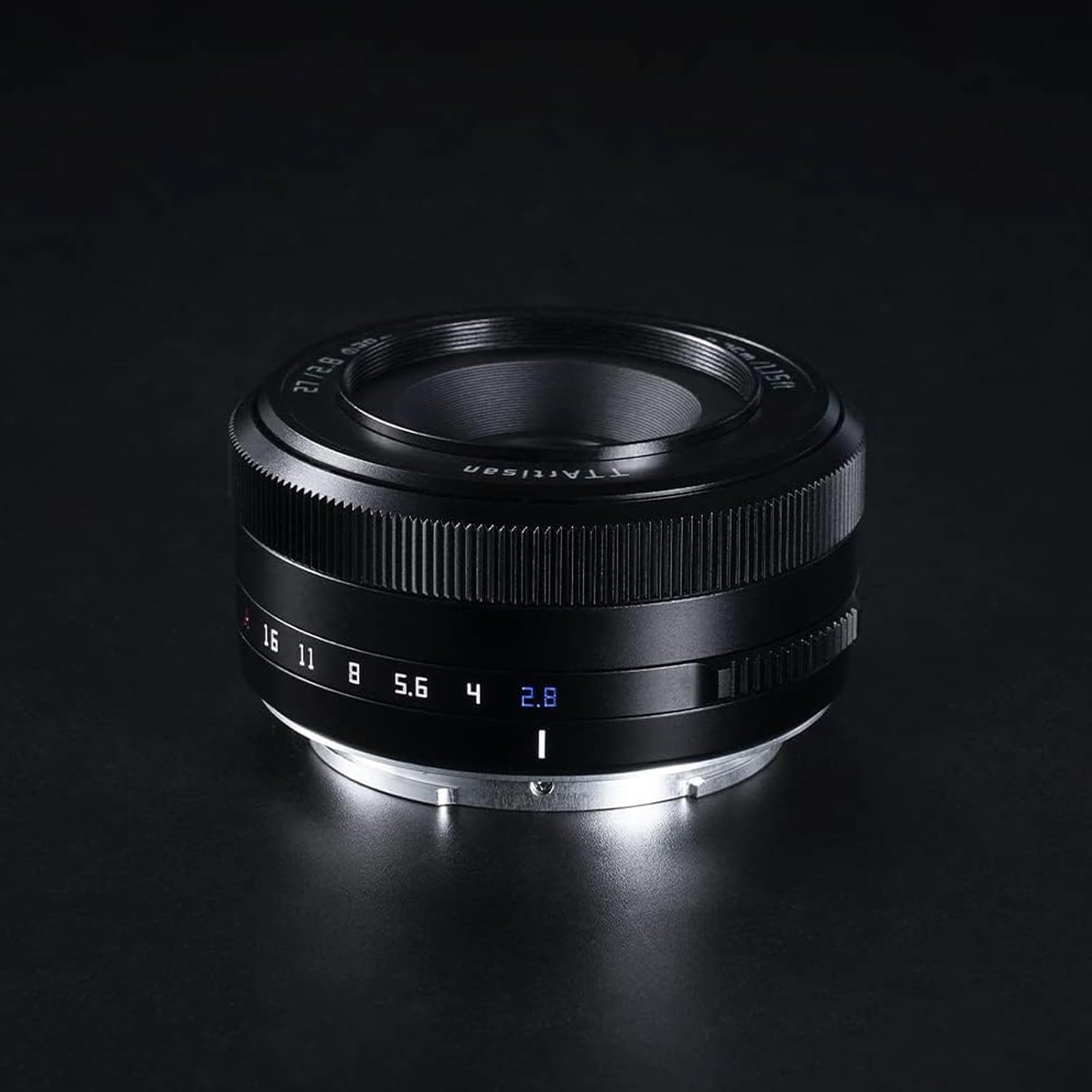
You bought the kit lens — probably the XF 18-55mm f/2.8-4 R LM OIS that ships with many X-series bodies — and now you’re deciding what comes next. If you’ve never owned a camera system before, a quick orientation: Fujifilm’s X-series cameras use a sensor format called APS-C, which is smaller than a full-frame sensor. Every lens measurement you’ll read was designed for that smaller sensor, and Fujifilm uses a proprietary mount called the X-mount — the physical connection between the lens and the body. Because the sensor is smaller than full-frame, a 35mm lens on an X-mount camera frames a scene the way a roughly 53mm lens would on a full-frame camera. That conversion factor (1.5×) is called the crop factor, and it matters every time someone recommends a focal length. This guide will show you how to think about your second lens purchase — and why getting it wrong is the most common $600–$1,200 mistake in the Fujifilm ecosystem.
Why the “Wrong Second Lens” Problem Is So Common
The first-lens mistake is usually harmless — the kit zoom is a genuinely capable piece of glass, and most people who buy it know what they’re getting. The second lens is where the money gets wasted, because buyers are now confident enough to spend more but haven’t yet developed a clear picture of what their actual gap is.
The two most common second-lens errors, based on patterns reported repeatedly across aggregated owner discussions and noted by reviewers at The Phoblographer in their Fujifilm ecosystem walkthroughs:
- Buying a second zoom that overlaps the kit zoom’s range. The XF 16-80mm f/4 is a beloved travel lens — but if you already own the 18-55, the overlap is nearly complete. You’ve spent ~$800 to gain roughly 3mm on one end and a stop of consistency on the other.
- Buying a fast prime before identifying which focal length you actually like. The XF 35mm f/1.4 is one of the most recommended lenses on the internet. It’s also a lens that many portrait photographers find slightly too wide, while many street photographers find slightly too tight. The aperture (f/1.4 — meaning the lens opens wide to let in a lot of light, creating blurry backgrounds and better low-light performance) seduces buyers before they’ve figured out whether 35mm is their natural framing instinct.
The fix is a two-step diagnostic before you open any product page.
Step One: Diagnose Your Gap, Not Your Wishlist
Pull up the EXIF data from your last 200 keeper images — the metadata embedded in every photo that records the focal length you used. Lightroom, Capture One, and even the free macOS Photos app can filter by this. What you’re looking for is the distribution of focal lengths: are most of your keepers clustered near 18mm (wide), 35mm (standard), or 55mm (short telephoto)?
If your keepers cluster at the wide end of the kit zoom, your gap is almost certainly a wider prime or an ultra-wide zoom. If they cluster at 55mm — the long end — you likely want a mid-telephoto prime or a portrait-length lens. If you’re shooting wide open (f/2.8–4 at the kit zoom’s limits) and wishing for more subject separation, your gap is maximum aperture, not focal length range.
By the Numbers: Common X-Mount Gaps and the Lenses That Fill Them
| Shooting Pattern | Gap | Best-Fit Lens | Approx. Street Price (May 2026) |
|---|---|---|---|
| Wide-end clusters, landscape/architecture | Wider coverage | XF 10-24mm f/4 OIS WR | $750–$800 |
| 35mm clusters, street/documentary | Fast standard prime | XF 35mm f/1.4 R | $500–$560 |
| 55mm clusters, portrait/events | Short telephoto prime | XF 56mm f/1.2 R WR | $950–$1,000 |
| Telephoto need, wildlife/sport | Reach | XF 70-300mm f/4-5.6 OIS WR | $700–$750 |
Prices synthesized from current retailer listings and MPB used-market data as of May 2026.
Step Two: New vs. Used — Run the Break-Even Before You Click “Add to Cart”
The Fujifilm X-mount ecosystem has been maturing since 2012, which means a substantial secondary market exists with a meaningful price spread. MPB and KEH Camera both carry graded X-mount glass in “Excellent” and “Good” condition; Photography Life’s buying guide notes that X-mount lenses hold value exceptionally well compared to third-party alternatives, which cuts both ways — you won’t get a bargain on something that’s still in high demand, but you also won’t lose much resale value if you buy carefully and realize the focal length isn’t right for you.
A practical framework:
- Lenses under $600 new: The used discount (typically 15–25% on MPB for Excellent-grade) often doesn’t justify the uncertainty unless the lens is more than three years old and well-documented. The XF 35mm f/1.4 used in Excellent condition runs around $380–$420 versus $500–$560 new — a real saving worth taking.
- Lenses $800 and above new: The used market becomes genuinely compelling. The XF 56mm f/1.2 R WR new sits near $950–$1,000; MPB lists Excellent-grade copies in the $700–$780 range as of mid-2026. That $200 delta is enough to rent the lens once before committing, with money left over.
- Lensrentals data point: Lensrentals has consistently reported the XF 56mm f/1.2 as one of the highest-demand X-mount primes in their rental fleet, which correlates with owners keeping their copies rather than selling — meaning Excellent-grade used inventory is tighter than for some comparable focal lengths.
The rent-first rule applies directly here. If you’re considering a lens above $700, renting for a weekend (~$50–$80 at most major platforms) before purchasing is the highest-ROI decision in this buying process. Lensrentals specifically offers Fujifilm X-mount glass in most major focal lengths, and a weekend shoot will tell you whether your instinct about a focal length was correct before you commit four figures.
The Three Scenarios: If X, Then Y
After the diagnostic and the break-even check, most X-series shooters fall into one of three decision frames.
Scenario A: You’re a Portrait, Wedding, or Event Shooter
Your kit zoom’s f/2.8–4 variable aperture is working against you in low light and limiting subject-background separation. The gap here is unambiguously aperture, not focal length range.
If X (portrait/event), then Y: XF 56mm f/1.2 R WR
DPReview’s evaluation of the XF 56mm f/1.2 R WR notes its rendering quality as among the strongest in the X-mount system, with owners reporting the autofocus improvement over the original 56mm f/1.2 (non-WR) as practically significant for moving subjects. At 56mm with a 1.5× crop factor, this lens frames like an 84mm full-frame portrait lens — a classic flattering compression for headshots and environmental portraits. Buy used if the $200 saving on MPB is meaningful to your budget; the optical elements in this lens are robust and well-documented.
The tradeoff to name explicitly: The 56mm is not a versatile all-day lens. If your events require you to work in tight rooms, you’ll find yourself backing into walls. Some portrait photographers on longer shoot days pair it with the XF 35mm f/1.4 as a two-prime kit, which the Phoblographer’s Fujifilm system walkthroughs identify as one of the most common working configurations among X-series portrait professionals.
Scenario B: You’re a Street, Documentary, or Travel Shooter
Your kit zoom is heavier and more conspicuous than ideal. You want something smaller, faster, and with a focal length you can internalize — the kind of lens where you stop thinking about what you’re seeing and start thinking about what you’re seeing.
If X (street/documentary), then Y: XF 23mm f/2 R WR or XF 35mm f/2 R WR
The f/2 WR primes are Fujifilm’s compact-series workhorses. Photography Life’s X-mount guide describes both as significantly smaller than their f/1.4 counterparts with minimal real-world optical penalty for street and travel use. The 23mm f/2 frames like 35mm full-frame (classic street focal length); the 35mm f/2 frames like 50mm (classic reportage). Both are weather-resistant and retail for $350–$400 new, with used Excellent-grade copies on MPB and KEH running $250–$300.
The one tradeoff: if you regularly shoot in genuinely dark environments — music venues, candlelit spaces — the f/1.4 variants justify their larger size and higher cost. The f/2 primes are not the right answer for that use case.
Scenario C: You’re a Landscape, Architecture, or Outdoor Shooter
The 18mm wide end of your kit zoom isn’t wide enough. You’re cropping compositions that should be expansive, or stitching panoramas that you’d rather capture in a single frame.
If X (landscape/architecture), then Y: XF 10-24mm f/4 OIS WR
PetaPixel’s system-level analysis of the Fujifilm wide-zoom options identifies the XF 10-24mm f/4 OIS WR as the practical choice for most shooters who need genuine ultra-wide coverage without moving to prime lenses. At 10mm on APS-C, you’re working with a 15mm full-frame equivalent — serious architectural and landscape reach. Owners consistently report the optical image stabilization as meaningful for handheld interior work.
The tradeoff: f/4 is the maximum aperture across the range. If you’re shooting ultra-wide in low light without a tripod, this lens will challenge you. A small number of landscape photographers pair it with the XF 16mm f/1.4 R WR for that exact reason, though the 16mm f/1.4 at ~$900 new is a significant secondary investment.
The One Decision You Shouldn’t Rush
There’s a version of this purchase decision where you spend a few weeks shooting your current kit at a single focal length — tape over the zoom ring, set it to 35mm equivalent (23mm on the barrel), and live with that constraint. It’s an old photojournalism training exercise that still works. Reviewers at The Phoblographer have recommended this exact approach as a pre-purchase diagnostic for first-time prime buyers, and the logic is sound: a focal length that feels wrong after two weeks of deliberate use will feel wrong every time you pick up the lens you bought to match it.
The Fujifilm X-mount system is deep enough and well-supported enough that there is no genuinely bad lens in the lineup — only lenses that are wrong for your particular gap. Do the EXIF analysis, run the break-even against MPB, rent once if the number is above $700, and then match the scenario to the lens. That sequence won’t guarantee you’ll love every shot, but it will make the wrong second lens a much harder purchase to accidentally make.