May 5, 2026 • Declan Marsh • 9 min reading time • Prices verified June 11, 2026
Fujifilm X-T5 vs. X-T30 III: The $900 Gap and Whether It's Honest Money
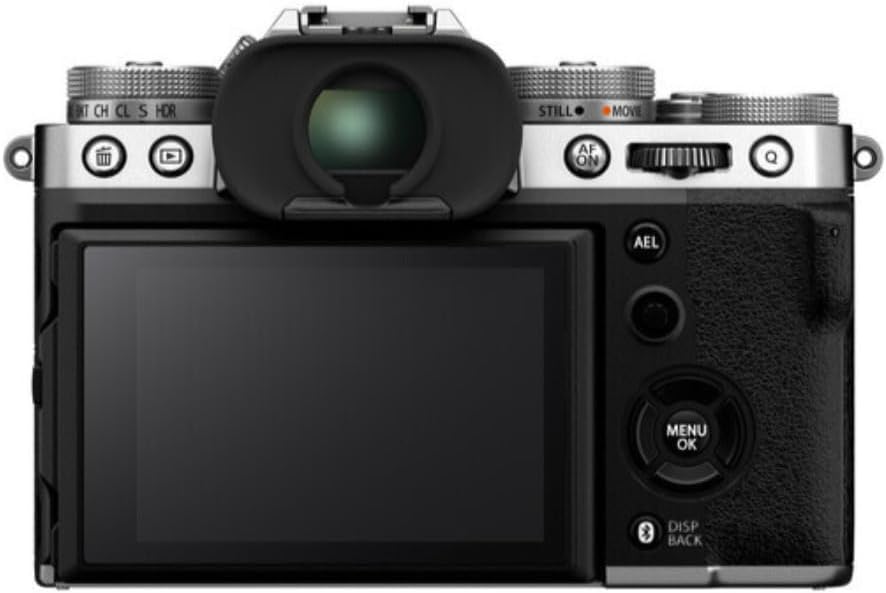
Fujifilm makes cameras in a way that rewards paying attention. The company has spent years refining a line of interchangeable-lens cameras — bodies that accept swappable lenses and give photographers direct, physical control over aperture, shutter speed, and exposure compensation via dedicated dials — built around their APS-C sensor format. APS-C means the sensor is roughly one and a half times smaller than a full-frame 35mm sensor, which affects how much of a scene you capture and how a lens’s field of view translates. Two of those cameras, the X-T5 and the X-T30 III, share the same sensor family and the same film-simulation processing engine, yet they retail at very different price points. As of May 2026, the X-T5 runs around $1,699 body-only; the X-T30 III sits near $799. That $900 gap invites an obvious question: is one camera twice as capable, or is it half the value? This article breaks down exactly where the money goes, what it buys you in practice, and which body the math favors depending on what you actually shoot.
By the Numbers
| Spec | X-T5 | X-T30 III |
|---|---|---|
| Sensor resolution | 40.2 MP | 26.1 MP |
| Viewfinder magnification | 0.8x EVF | 0.62x EVF |
| Body weather sealing | Yes (WR) | No |
| IBIS (in-body stabilization) | 7-stop (5-axis) | None |
| Retail price (body only, May 2026) | ~$1,699 | ~$799 |
| Used market, excellent condition | ~$1,150–$1,250 | ~$520–$580 |
Where the $900 Actually Goes
Let’s be direct: you are not paying $900 for a sharper image. Both cameras draw on Fujifilm’s X-Trans CMOS 5 sensor generation — the X-T5 carries the higher-resolution HR variant at 40.2 MP while the X-T30 III uses the 26.1 MP version — meaning the underlying color science and film simulation rendering are closely related. The rendering character — the reason people shoot Fujifilm in the first place — is not what separates these two bodies.
What you are paying for is infrastructure. Specifically:
IBIS: The Single Biggest Functional Delta
The X-T5 carries Fujifilm’s 7-stop five-axis in-body image stabilization system. The X-T30 III has none. IBIS — in-body image stabilization, which uses a sensor that physically shifts to compensate for camera movement — is the single largest functional difference between these two cameras.
If you shoot prime lenses at slower shutter speeds — street photography in low light, portraits in dim venues, travel interiors — IBIS dramatically expands what’s recoverable without a tripod. DPReview’s full Fujifilm X-T5 review calls the IBIS implementation a genuine shooting-experience upgrade over previous X-T bodies, not just a spec-sheet checkbox. For shooters who regularly push primes below 1/60s, this gap is felt on every outing.
FUJIFILM
$1,899.00
In stock on Amazon
Check price on AmazonWeather Sealing and Dual Card Slots: Working-Photographer Infrastructure
The X-T5 is rated WR (weather-resistant); the X-T30 III has no environmental sealing. For outdoor photographers working in rain, dust, or unpredictable conditions, this is a real operational difference. For studio and controlled-environment work, it rarely matters.
The X-T5 also carries dual card slots; the X-T30 III does not. For working professionals who bill clients and cannot afford a card failure to destroy a session, dual slots are not a luxury — they are a basic redundancy that defines whether a camera is production-ready. Photography Life’s ongoing coverage of the X-T series consistently frames weather sealing and dual-slot redundancy as the dividing line between Fujifilm’s enthusiast and professional-tier bodies.
FUJIFILM
$1,899.00
In stock on Amazon
Check price on AmazonViewfinder and Resolution: Where the Gap Narrows for Many Shooters
The X-T5’s 5.76M-dot, 0.8x EVF (electronic viewfinder — the electronic display you look through rather than an optical window) is among the better EVFs in the APS-C class. The X-T30 III’s 2.36M-dot, 0.62x EVF is smaller and lower-resolution. Photographers who rely on the viewfinder for composition and critical manual focus will feel this gap meaningfully. Those who shoot LCD-primary, or who are transitioning from smartphone habits, will barely register it.
On resolution: 40.2 MP versus 26.1 MP matters in specific contexts — large-format print, aggressive crops for wildlife or sports without a long telephoto, or commercial licensing requiring high-megabyte delivery files. For social media, web, and sub-A2 print, the X-T30 III’s 26 MP output is more than sufficient. The Phoblographer’s Fujifilm X-T5 review notes that the 40 MP files impose a real storage and processing tax on shooters who aren’t already running fast cards and contemporary editing hardware — a cost that’s easy to underestimate at the point of purchase.
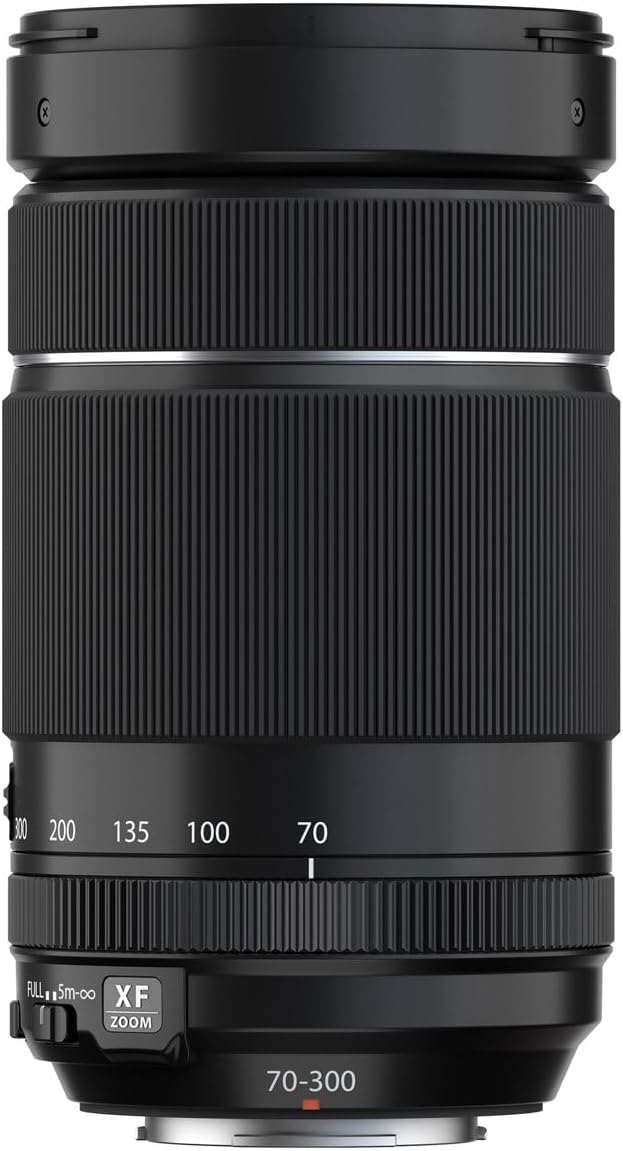
Fujifilm
$949.00
In stock on Amazon
Check price on AmazonThe Decision Frame: What’s Your Actual Use Case?
This is where the analysis has to get specific, because the right answer genuinely differs by situation.
For Working Photographers Billing Clients
The X-T5 is the professional-grade choice, and the case is straightforward. Weather sealing, dual cards, IBIS, and a viewfinder that supports critical manual focus with adapted vintage glass — these are tools that protect your workflow and expand your capability. The $900 gap narrows further when you price it in the used market. Excellent-condition X-T5 bodies available through reputable used-camera dealers in May 2026 run in the $1,150–$1,250 range, which cuts the gap versus a new X-T30 III to roughly $400–$450. At that spread, a working portrait or documentary shooter who needs weather sealing and IBIS should not hesitate.
FUJIFILM
$1,899.00
In stock on Amazon
Check price on AmazonFor Dedicated Hobbyists Shooting in Controlled Conditions
The X-T30 III is not a compromise — it is the correct tool. You are not giving up Fujifilm’s color rendering, you are not giving up solid autofocus performance, and you are not giving up the 26 MP resolution that handles virtually every hobbyist output format. PetaPixel’s coverage of the X-T30 III at launch emphasized that the body inherits enough of the X-Trans 5 processing improvements to feel like a genuine generational step rather than a feature-stripped downgrade. The $900 you save versus a new X-T5 is better deployed toward a faster prime, a quality wide-angle, or a dedicated lighting kit.
Photography Life’s coverage of compact APS-C cameras consistently makes the case that the always-with-you advantage of a smaller, lighter body compounds over time: the camera you actually carry outperforms the camera you leave home because it’s heavy. The X-T30 III’s notably smaller footprint is a real asset for travel and street photographers who already know they want to keep the kit as lean as possible.
Fujifilm
$949.00
In stock on Amazon
Check price on AmazonFor Buyers Entering the Fujifilm System on a Budget
A used X-T30 III — or the closely related X-T30 II — in excellent condition from a reputable used-camera dealer in the $520–$580 range is an exceptional entry point into the Fujifilm X-mount ecosystem. All X-mount glass transfers if you upgrade later, so buying into the system at this tier costs you nothing in lens compatibility. You get full access to Fujifilm’s film simulations, the X-Trans color rendering that defines the brand’s appeal, and a genuinely capable 26 MP sensor — without overcommitting capital before you know your lens preferences or whether you’ll stay in the system long-term.
2
$8.99
In stock on Amazon
Check price on AmazonThe Video Question: An Honest Caveat
If your primary deliverable is video, neither of these bodies is your ideal tool, and that deserves saying plainly. The X-T5 shoots 6.2K internally and handles 4K at high frame rates, but its form factor and feature set are clearly optimized for stills — a direction Fujifilm made explicit in the body’s design. The X-T30 III offers competent 4K recording but lacks the thermal headroom and professional video controls that serious video work demands. If video is your primary output, a different body category — Fujifilm’s own X-H2S, or a dedicated cinema rig depending on your budget and workflow — deserves serious evaluation before you commit to either of these bodies.
The Used-vs-New Math
One of the sharper ways to reframe this comparison is to price it honestly at used market rates rather than comparing new-to-new.
A new X-T5 at $1,699 is $900 more than a new X-T30 III at $799. That’s the headline gap, and it’s real.
But an excellent-condition used X-T5 from a reputable dealer runs $1,150–$1,250 in May 2026. A new X-T30 III at $799 versus a used X-T5 at $1,200 is a $400 decision — and at $400, IBIS plus weather sealing plus dual cards plus a significantly better EVF becomes a much more defensible spend for anyone with commercial or semi-professional intent.
The counter-argument is equally valid: a used X-T30 III in excellent condition runs $520–$580. If your legitimate use case is hobbyist or system-exploration, that’s $620–$680 freed from your body budget and redirectable to glass. A used X-T30 III paired with a Fujinon 35mm f/1.4 or a Fujinon 18mm f/2 is a more complete shooting kit than a used X-T5 with the kit zoom for the same total investment. DPReview’s X-T5 coverage explicitly acknowledges that the body’s value proposition depends heavily on whether the shooter actually needs the professional infrastructure it provides — and that the lens budget often matters more than the body budget for image quality.
The Honest Trade-off Summary
There is a version of this comparison where the X-T5 is obviously worth it and a version where it obviously isn’t. The mistake is treating the $900 gap as a quality gap rather than a capability-set gap.
The X-T5 earns its premium when:
- You need weather sealing for outdoor professional work
- IBIS is operationally relevant to your shooting (low-light primes, adapted glass, handheld at slow speeds)
- Dual card slots are non-negotiable for client sessions
- You regularly print at large format or need to crop heavily in post
- You rely heavily on the viewfinder rather than the rear screen for composition
The X-T30 III is the right call when:
- Your shooting environment is controlled or mostly dry
- You prioritize portability and the always-with-you form factor
- The $900 delta has better destinations in your kit — a second prime, a better bag, a lighting system
- You are building system intuition and don’t want to over-invest in a body before you know your lens preferences
- Your output is digital-first: web, social, client galleries below large-format print
The $900 gap is honest money — it buys real, professional-grade infrastructure. It is just not infrastructure that every photographer needs. The X-T30 III is not a beginner camera wearing professional branding; it is a genuinely capable imaging tool at a price that respects the buyer’s judgment. The X-T5 is the camera you grow into when the constraints of the smaller body become actual friction in your workflow — not before.
If you are not yet hitting those constraints, buy the X-T30 III, spend the savings on glass, and revisit in 18 months.