May 29, 2026 • Declan Marsh • 9 min reading time • Prices verified June 11, 2026
Point-and-Shoot Cameras That Are Actually Worth Buying — and the Ones to Skip
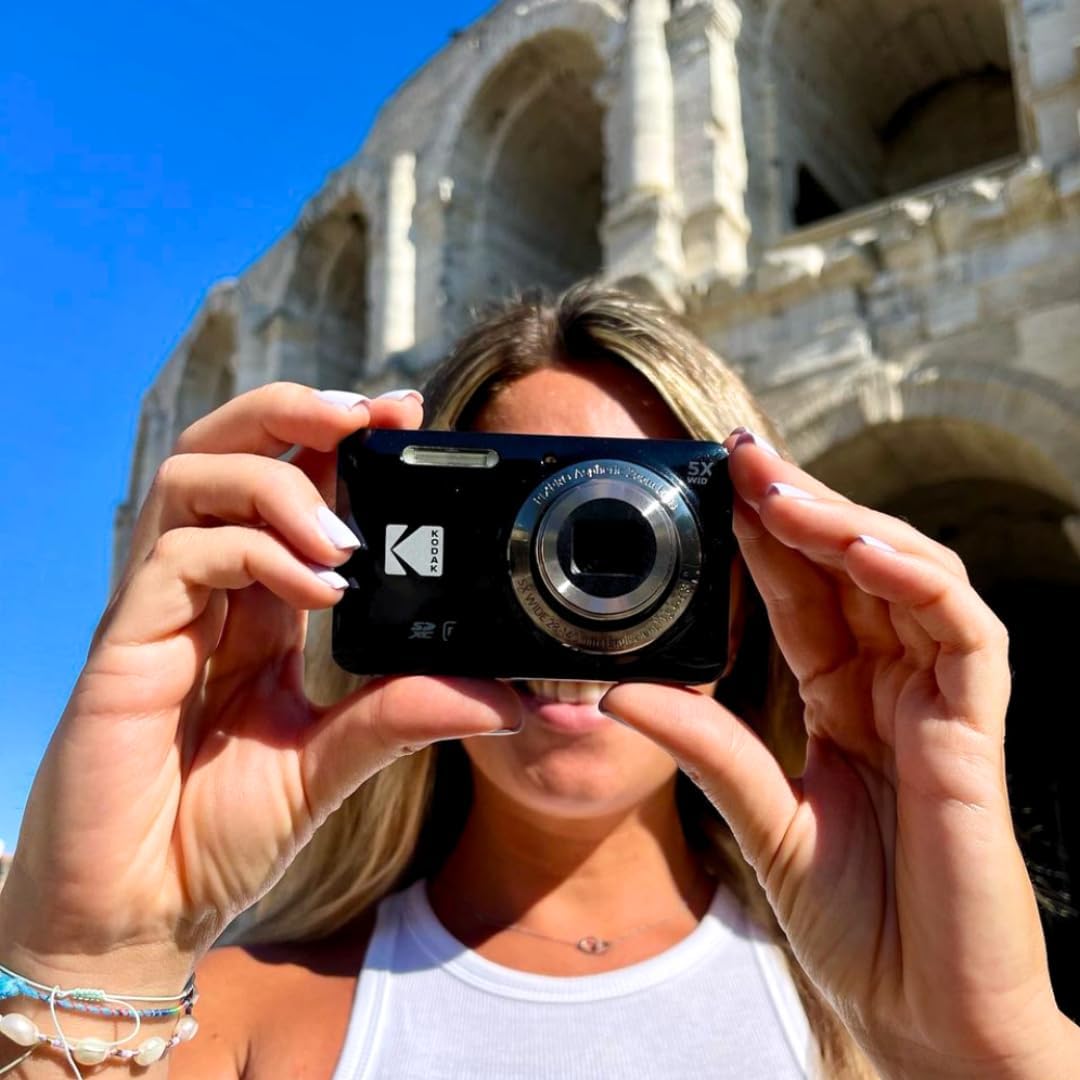
A point-and-shoot camera is exactly what the name says: a compact, mostly automatic camera you can carry in a pocket, aim at something, and photograph without adjusting a dozen settings first. No swappable lenses, no mirror flipping inside the body, just a sealed, self-contained package. For a long stretch of the 2010s, smartphones ate this category alive — and honestly, they ate the bottom half entirely. But something quietly shifted around 2022–2023. A cluster of well-made compacts held their value, developed loyal owner communities, and started showing up on waiting lists. If you’re reading this trying to decide whether a $400–$1,000 point-and-shoot deserves a place in your bag alongside a mirrorless kit, or whether you’re handing one to a family member as a first camera, this guide lays out exactly which models earn the money and which ones are coasting on category confusion.
Why the Point-and-Shoot Market Split in Two
The honest framing here is that smartphones erased one tier and validated another.
A sub-$200 point-and-shoot with a small 1/2.3-inch sensor (a sensor roughly the size of a thumbnail nail) cannot compete with a current flagship phone on image quality, software processing, or share-ability. Pop Photo’s compact camera market overview from 2024 put it plainly: the only compact cameras growing in unit sales were those with sensors meaningfully larger than what phones carry, or those offering a physical experience — dials, a viewfinder, tactile controls — that phones simply don’t replicate.
The split produced two categories worth caring about:
Tier 1 — Premium compacts with large sensors: Cameras like the Ricoh GR IIIx, Sony ZV-1 II, and Canon PowerShot G5 X Mark II use 1-inch or APS-C sensors (APS-C is a crop sensor about the size of a thumbnail, roughly 15× larger than a smartphone sensor). These produce images that are genuinely, measurably different from phone output — especially in low light and with shallow depth-of-field (the blurred background effect).
Tier 2 — Casual compacts for gifting or light travel: Cameras like the Canon IXUS 185 or Sony W800 series. They’re not terrible. They’re also not better than a two-year-old phone. Buy them only when the use case demands a physical, dedicated camera and the budget truly caps at $150.
The models in the middle — the $200–$350 range with mediocre 1/2.3-inch sensors — are where money gets wasted. Wirecutter’s Best Point-and-Shoot Cameras guide has repeatedly flagged this dead zone, noting that shoppers who land here often feel underwhelmed within six months.
The Cameras Worth Buying: A Tier-by-Tier Breakdown
The Ricoh GR IIIx — The One Serious Photographers Actually Carry
Street price as of May 2026 sits around $1,050 new from authorized dealers; certified pre-owned units through MPB have been trading in the $720–$820 range depending on condition.
The GR IIIx packs an APS-C sensor — the same sensor size used in mainstream mirrorless bodies like the Fujifilm X-T series — into a body that fits in a shirt pocket. The fixed lens is 40mm equivalent (a focal length close to what the human eye sees naturally), f/2.8 aperture. There’s no zoom. That constraint is the point.
The Phoblographer’s long-term impressions of the GR IIIx noted that working photographers consistently cite the camera’s “snap focus” system — a zone-focus mode that pre-sets focus distance for fast, unthinking street shooting — as something they genuinely use and don’t find on any other pocket camera. Photography Life’s field notes on the GR III (the wider 28mm sibling) echoed the same pattern: owners who shoot documentary, travel, or street work keep the camera for years; owners who wanted a zoom regret the purchase within months.
The decision rule: If your shooting is primarily 35–50mm equivalent (portraits, street, environmental), you don’t need zoom, and you want the smallest possible APS-C camera, the GR IIIx is the clear pick. If you need any zoom range, move on.
The Sony ZV-1 II — The Vlogger’s Compact Done Right
Street price: approximately $750 new; used listings on KEH Camera have been appearing in the $480–$560 range.
The ZV-1 II uses a 1-inch sensor paired with a zoom lens covering 18–50mm equivalent — a range that goes noticeably wider than its predecessor and competes directly with what a vlogger actually needs for handheld, self-facing content. DPReview’s Sony ZV-1 II review highlighted the autofocus system’s subject-recognition speed as best-in-class for 1-inch compacts, and noted that the built-in directional microphone consistently outperforms the ZV-1 original in reviewer comparisons.
For still photography, owners report the 1-inch sensor delivers clean results up to ISO 1600 and acceptable output at ISO 3200 — that’s roughly one to two stops better than a phone sensor in practical low-light performance.
The decision rule: If video is your primary or co-equal use case alongside stills, and you want a pocketable single-camera solution for content creation, the ZV-1 II earns its price. If you’re purely a stills shooter, the GR IIIx’s larger sensor and better JPEG rendering matter more.
The Canon PowerShot G5 X Mark II — The Premium Generalist
Street price: approximately $930 new (if you can still find it in stock — Canon’s compact lineup has been thinning since 2024); used units via MPB range from $550–$700.
The G5 X Mark II offers a 1-inch sensor, a pop-up electronic viewfinder (a small screen you hold to your eye for precise framing — rare in this category), and a 24–120mm equivalent zoom range. PetaPixel’s Canon PowerShot V10 overview, while focused on a different Canon compact, noted the broader pattern: Canon’s 1-inch compact lineup attracts buyers who want the optical zoom range that Sony and Ricoh don’t offer at equivalent sensor quality.
The G5 X Mark II is not cutting-edge in 2026 — it launched in 2019, and Canon has not refreshed it. But the image quality holds up, and used pricing reflects honest value. If Canon announces a successor, reassess; until then, the used market is where this camera makes sense.
The decision rule: If you need zoom range beyond 50mm, want an electronic viewfinder, and can accept that you’re buying a camera on an aging platform, the used G5 X Mark II is the most versatile 1-inch compact you can find under $700.
By the Numbers
| Camera | Sensor Size | Zoom Range | New Price (May 2026) | Used / CPO Range |
|---|---|---|---|---|
| Ricoh GR IIIx | APS-C | Fixed 40mm eq. | ~$1,050 | $720–$820 (MPB) |
| Sony ZV-1 II | 1-inch | 18–50mm eq. | ~$750 | $480–$560 (KEH) |
| Canon G5 X Mark II | 1-inch | 24–120mm eq. | ~$930 (limited stock) | $550–$700 (MPB/KEH) |
| Canon IXUS / Sony W-series | 1/2.3-inch | Varies | $100–$180 | Skip — buy new or not at all |
The Cameras to Skip (And Why)
Any 1/2.3-inch sensor compact in the $200–$350 range. This is the dead zone. You’re paying a premium over the cheapest cameras without getting the sensor performance that justifies stepping up from a phone. Wirecutter has flagged this repeatedly. The brands aren’t the problem — it’s the sensor class.
The original Sony ZV-1 (first generation, now heavily discounted). It’s tempting at $380–$420 used. But the ZV-1 II’s wider lens and improved autofocus make the first-generation camera feel genuinely outdated for video work. If the use case is primarily video, the gap matters. If budget truly won’t stretch, consider the ZV-1 II on KEH’s certified pre-owned program over the ZV-1 original.
No-brand or white-label compacts from import retailers. Pop Photo’s 2024 compact market overview explicitly noted the resurgence of unbranded “film-look” compacts on social media, many sourced through gray-market channels with no service network and sensors that don’t match marketing claims. There’s no repair path, no warranty enforcement, and image quality consistently disappoints owners six months in.
The Fujifilm X100VI — not because it’s bad, but because it’s miscategorized. The X100VI is a spectacular camera. It’s also $1,599 new, carries an APS-C sensor, and offers manual controls sophisticated enough to serve professionals. It’s the right answer for a specific buyer. But calling it a “point-and-shoot” is category confusion that leads buyers to compare it against a GR IIIx or ZV-1 II on price and walk away thinking they’re overpaying. The X100VI belongs in a different conversation — mirrorless-adjacent fixed-lens cameras for serious photographers — not in this bracket.
The Rent-It Answer (When the Math Says So)
If you’re a working photographer evaluating a premium compact as a backup body or a travel camera for a specific trip, the rental math is worth running.
LensRentals and comparable platforms typically price the Sony ZV-1 II at roughly $45–$55 for a five-day rental window. If you’re evaluating whether a $750 purchase makes sense for a two-week trip once or twice a year, you’re looking at a break-even point somewhere around 7–8 rental cycles — or roughly four years of annual trip use before ownership wins on pure cost. That’s not an argument against buying; it’s an argument for being honest about frequency of use before committing.
For casual buyers who want a compact for one specific trip or event, renting a GR IIIx or ZV-1 II is a legitimate and financially rational answer that the photography community under-discusses.
The Clear Decision Rules
- You shoot street, documentary, or travel stills and hate carrying gear: Ricoh GR IIIx, new or CPO. Accept the fixed focal length.
- Video is a primary or equal use case and you want a pocketable camera: Sony ZV-1 II, new or KEH certified pre-owned.
- You need zoom range, want a viewfinder, and can buy used: Canon G5 X Mark II on MPB or KEH, budget $600 or under.
- Budget is under $200 and the user genuinely won’t use a phone: Canon IXUS or Sony W-series, buy new (used pricing on budget compacts rarely saves enough to justify CPO risk).
- You’re buying once a year for a specific trip: Rent the GR IIIx or ZV-1 II. Do the break-even math first.
- You’re being drawn toward the $200–$350 1/2.3-inch middle tier: Stop. Move up or move down. That bracket does not deliver on what it charges.
The point-and-shoot category is smaller than it was a decade ago, but the cameras that survived the smartphone culling are genuinely good. Buy into the tier that’s worth it, skip the dead zone, and let the rental option sit on the table as a real answer when the numbers favor it.